Bills Due This Week: Why Knowing What's Coming Matters More Than Budgeting
Stop categorizing every transaction. Know what bills are due this week and you'll solve 80% of your money stress with 20% of the effort.
Every budgeting app wants you to categorize your spending, set limits, and track where every dollar goes. They promise financial clarity through discipline and detailed tracking.
Most people try it for two weeks and quit.
Here's the thing: you don't need to know that you spent $47.23 on coffee last month. You need to know that your car insurance auto-renews on Thursday and you forgot about it.
The Problem With Traditional Budgeting
Budgeting apps like YNAB, Goodbudget, and EveryDollar use envelope budgeting. Assign every dollar to a category before you spend it. Groceries get $400. Entertainment gets $150. And so on.
In theory, this creates accountability. In practice, it creates homework.
Every transaction needs to be reviewed. Categories need adjusting. Overspending in one category means moving money from another. It's a part-time job.
For some people, this works. They like the control. They enjoy the process. But for most people, the overhead kills the habit. You fall behind for a week, the app becomes a mess, and you're back to checking your bank balance and hoping for the best.
If that's you, you're not bad with money. The tool just didn't fit.
What Actually Causes Financial Stress
It's not lattes.
It's the $180 insurance premium you forgot about. The annual subscription that renewed without warning. The utility bill that spiked because of a cold snap.
Surprise charges cause overdrafts, missed payments, and cascading problems. No amount of tracking your "coffee budget" prevents them.
Bill Tracking vs. Budgeting
Budgeting looks backward: "Here's what you spent last month."
Bill tracking looks forward: "Here's what's due this week."
Budgeting Bill Tracking "I spent $180 on subscriptions last month" "I have $45 in subscriptions due this week" Categorize every transaction Only track recurring charges Review monthly Check weekly Retrospective PredictiveYou don't need to know your average monthly grocery spend to manage your money. You need to know that your rent, phone bill, and car payment all land in the same three-day window.
How to Set This Up
Manual method (works, but requires discipline):
- List every recurring bill: rent, utilities, subscriptions, insurance, loans
- Note the amount and due date for each
- Put them in a calendar or spreadsheet
- Check it every Sunday night
This works if you actually do it. Most people don't. The calendar gets stale, amounts change, and you're back to guessing.
App method (if you want it automatic):
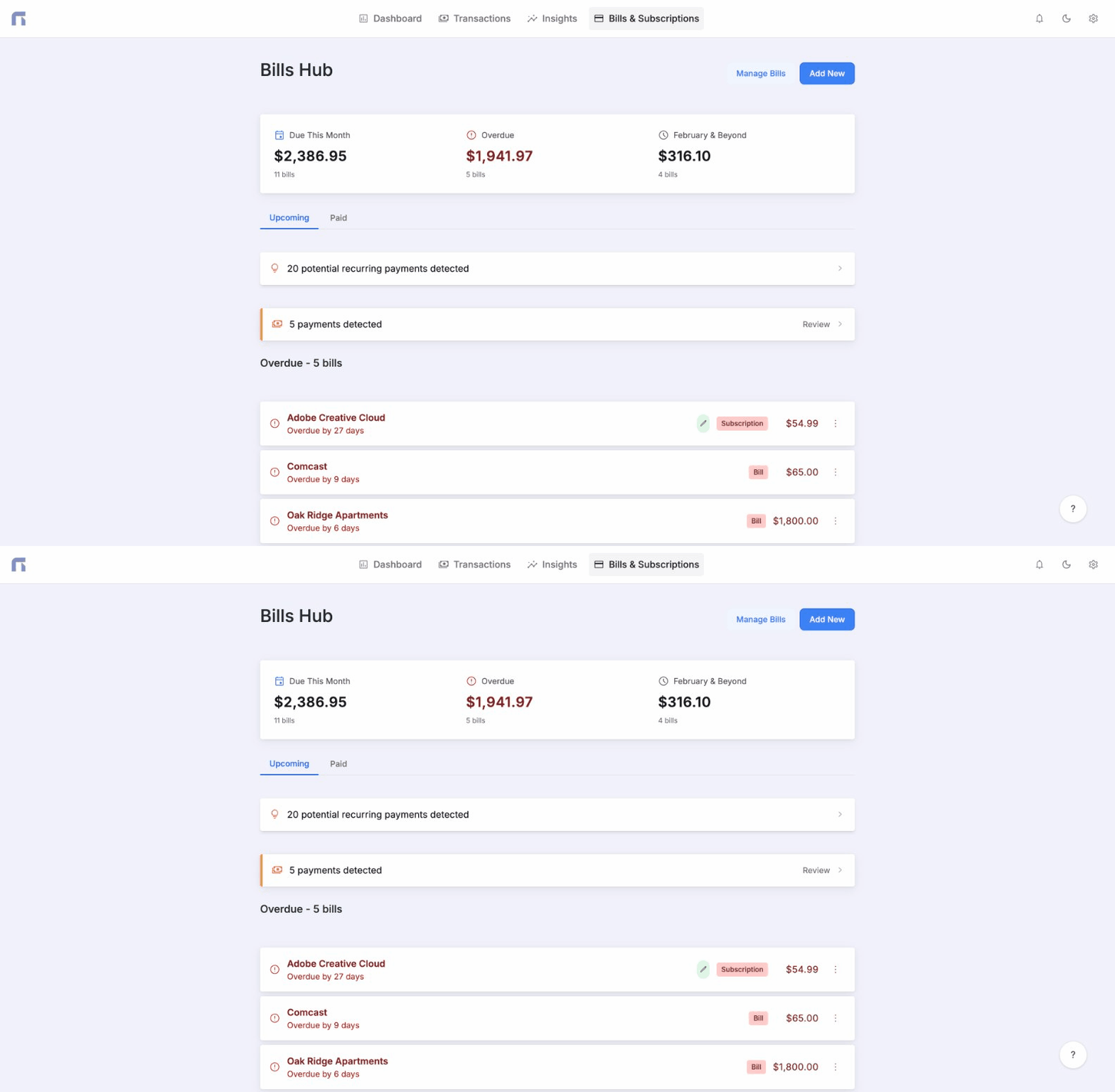
If you want the visibility without the maintenance, Nexafin does this automatically. Connect your bank or upload a statement, and Bills Hub finds your recurring charges and shows:
- What's due this week
- What's overdue
- What's coming up
No envelope budgeting. No spending categories. Just a clear view of what's due and when.
This Isn't Anti-Budgeting
If detailed budgeting works for you, keep doing it. Some people genuinely thrive on the granular control.
But if you've tried YNAB or Mint or EveryDollar and bounced off them, if the categorization felt like homework and the guilt wasn't motivating, you don't need more discipline. You need a different approach.
Knowing what's due this week solves 80% of the "where did my money go?" problem with 20% of the effort.
The Real Goal
Financial apps should reduce anxiety, not add to it.
Most people aren't irresponsible with money. They're just reacting to it instead of anticipating it. Every surprise bill feels like a personal failure when it's really just a visibility problem.
Fix the visibility, and the stress drops.
Start simple: know what's due this week. That's it. Everything else is optional.
Ready to take control of your finances?
Track spending, monitor net worth, and gain clarity on your money.
Start Free Trial →